- Home
- Current Campaigns
- Air Quality Advice
- Information and resources for health and social care professionals
Information and resources for residents and visitors
Every day, we take around 20,000 breaths so it’s important to know what we are breathing in and how it may affect us. These pages are a guide for Suffolk residents and visitors to all things air related, from how air quality is monitored and managed through to advice for reducing the amount of polluted air we breathe in to protect our health.
Air pollution is the term used to describe lots of different types of pollution in the air around us including particles, gases and chemicals.
Below are the four most damaging pollutants found in the UK air:
-
Particulate matter (PM or PM 2.5) – is the most harmful pollutant to human health. It is made up of particles, smaller than the width of a human hair, and we can breathe them in without noticing. Burning wood or coal in the home, smoking cigarettes and brake and tyre wear on cars all create particulate matter, but it can also come from natural sources like pollen and desert dust.
-
Nitrogen Dioxide (NO2) is produced by burning fossil fuels such as coal, oil, gas or diesel. The majority of the nitrogen dioxide in our air is caused by transport, so - cars, lorries, buses, rail and shipping.
-
Sulphur Dioxide (SO2) is an acidic gas produced from burning coal or crude oil. The greatest sources of SO2 in the air are caused by generating energy, and industrial and domestic burning.
-
Ammonia (NH3) is a gas that is released into the atmosphere mostly from agricultural sources like slurry, farm waste and fertilisers.
The term ‘air quality’ means how polluted the air we breathe is (UK Government, 2019) and includes both the air indoors and the air outdoors.
Air quality across most of Suffolk is reasonably good. However, there are three Air Quality Management Areas (AQMA’s) where Nitrogen Dioxide, exceeds Government legal limits. All three of the AQMA’s are in Ipswich, as Suffolk’s most populated area.
Most of the poor air quality in Suffolk is caused by traffic on busy roads, but burning at home, farming and industry also contribute.
Everyday people are exposed to harmful pollution where they live, work and study. Evidence shows, there is no safe level of exposure to air pollution – both long-term exposure (over years) and short-term exposure (over hours) to low levels of air pollution can still impact our health.
This is why it is important that Suffolk County Council works closely with partners to address poor air quality to reduce the health risks. Find out more about this in the Suffolk Air Quality Strategy
For up-to-date information about the air quality where you live visit the daily air quality index (DAQI) for a daily forecast.
More information on reducing air pollution and simple tips for and protecting your heath can be found in the sections below.
When we breathe polluted air, whether inside or outside, we breathe in a mix of gases and particles.
When air pollutants enter the body, they can have effects on various organs and systems. This includes the eyes, nose and throat, the heart, the brain and the reproductive system.
Whether we are at home or out and about, there are simple things we can all do to reduce our exposure to air pollution and protect our health.
Four tips for reducing exposure outside the home:
1. Check the air pollution in your area
The daily air quality index (DAQI) is like the weather forecast but for air quality. It tells you about the levels of air pollution in your local area, helping you to plan ahead and take recommended actions to protect the health of you and your loved ones.
2. Choose to walk or wheel away from busy roads
Research has shown that taking a quieter route through side streets, parks or pedestrianised areas instead of along busy main roads will help reduce your exposure to air pollution by 20%. (Source Clean Air Hub – How can I protect myself and my family during a period of high air pollution)
Suffolk on Board is a Suffolk specific journey planning tool that enables you to select ‘Quiet Routes’ for journeys whether on foot or wheels.
Go Jauntly is a free Walking App that enables you to select Green Routes for your journey taking you away from polluted roads. You can also find maps and route suggestions on the Discover Suffolk webpages and app.
If you can’t take a different route then walk or scoot on the inside of the pavement, especially when with small children, pushchairs or wheelchair users who are closer to exhaust fumes.
Young children can be especially vulnerable to pollution on busy routes - a recent study found children were exposed to 30% more toxic pollution than adults while walking to school.
3. Avoid travelling at busy times of day
Avoid travelling during rush hour and via congestion hotspots to avoid exposure inside or outside of a car. If you can, delay or start your journey earlier to reduce your exposure.
Travelling outside of rush hours should also make a quicker, easier and more pleasant journey.
If you have to travel at peak times:
-
Keep your vehicle windows closed and put your fans on ‘recirculate’ to avoid pollution getting inside.
-
Use journey mapping tools to avoid busy congested hotspots where air pollution will be higher.
-
Switch your engine off when stationary to reduce your contribution to pollution and help protect the health of others.
4. Leave the car at home whenever you can
Driving, especially at peak times, can expose you to more air pollution than walking or cycling. Studies have shown that exposure to air pollution is less when you walk and cycle, as opposed to driving, with some research suggesting air pollution can be 9 -12 times higher inside the vehicle.
Six tips for reducing exposure inside the home:
We often think about pollution as being something that only affects us when we are outside. However, indoor air pollution comes from many everyday items found in our homes. The level of some pollutants can actually be much higher indoors than outdoors. Studies show that up to 90% of the day is spent inside, so improving air quality in our homes helps protect our health:
1. Tackle damp and mould
Damp and mould in the home can produce allergens, irritants, mould spores and other toxins that are harmful to our health. The more serious the damp and mould problem and the longer it is left untreated, the worse the health impacts and risks are likely to be. Reducing moisture in the home can help prevent damp and mould.
Simple actions you can take include:
-
Wipe damp or wet windows, sills, walls and surfaces with a paper towel and throw it away. If you use a cloth, wash after wiping to avoid spreading mould spores around the home.
-
Keep lids on pans when cooking to reduce moisture and save energy.
-
Use extractor fans and cooker hoods if you have them or open windows during cooking or showering and leave on/open for at least 15 minutes afterwards.
-
If you dry clothes indoors, it can help to hang them in one room with an open window and a closed door to stop moist air circulating.
-
If possible, keep low, background heating on all day and a window slightly open (warm air can hold more moisture so you're less likely to have condensation). Don't put heating on for short periods of time (this will make the problem worse because the air heats and cools quickly). It might seem strange to keep the heating on with a window slightly open, but it helps because you're letting air that's full of moisture out and dry air in. Dry air is easier and cheaper to heat.
If you are struggling to heat your home, support is available. Visit Warm Homes Suffolk for more information.
If you are a council tenant, damp and mould issues can be reported to your local council. If you rent privately, you must report damp and mould issues to your landlord/ letting agent in the first instance. More information on what to do if your landlord doesn’t take action to address the problem can be found on your local council’s website.
For more tips to prevent damp and mould visit the Energy Saving Trust website.
2. Open windows
Air pollution can come from everyday activities and can build up over time inside your home.
Open windows a few times a day to refresh the air in your rooms and let indoor pollutants escape or use mechanical ventilation and extractor fans if you have them. Do this especially when you are:
-
Smoking or vaping
-
Cooking using gas
-
Frying
-
Showering
-
Using cleaning products
-
Painting and using DIY products
If you live close to a busy road, avoid opening windows during peak times, for example rush hour, as air pollution levels will be higher outside. Open windows at the back of the house to avoid pollutants coming in from outside.
3. Cut down use of aerosols, sprays and scented products
Air fresheners, cleaning sprays (like stain removers, disinfectants, glass cleaners and grease removers), aerosols, paints and perfumes can contain harmful chemicals that contribute to indoor air pollution. Cutting down use of them is the best option for reducing exposure but, as an alternative, using products that contain more natural or plant-based ingredients (and no chemicals) will help to reduce your exposure to harmful chemicals. Easy swaps include:
-
Using roll-on deodorant instead of a spray
-
Dusting with a damp cloth instead of using spray cleaners which can be full of chemicals. You can also make your own cleaning products with simple low-cost supermarket ingredients such as vinegar, bicarbonate of soda, lemon and soda crystals. See tips at: Homemade cleaning products | How to Waste Less
-
Opening windows rather than masking odours using synthetic plug in, aerosol or spray air fresheners
Look for products with an Air Label score. A score of A+ means very low emissions with a C indicating high emissions, accredited products can be found on the Air Label website.
If you can’t change the products you use, always read product labels and follow the manufacturer’s instructions and recommended quantities for use. When possible, try to use low emission products (sometimes labelled "low VOC") and consider storing them in a shed.
4. Avoid unnecessary burning
Wood-burning stoves and open fires are one the biggest sources of small pollution particles, which cause heart and lung disease. New research, commissioned by Global Action Plan, finds that air pollution from home burning contributes to nearly 2,500 deaths each year in the UK. Across the population, this adds up to over 27,000 years of life lost to early deaths. The research also suggests that air pollution from burning in the home contributes to new cases of a range of serious health conditions, including an average of 3,741 cases of diabetes and 1,493 cases of asthma in the UK each year.
Stopping or reducing burning at home will reduce your exposure to harmful pollutants and help protect your health. For some residents open fires or wood-burning stoves are their main source of heating. However, making a few small changes can make a huge difference in terms of the efficiency of your fire and the effect on the air quality in your home. So, what can you do?
-
Burn less - many people use an open fire or wood-burning stove in addition to their normal heating. If your house is already warm, then consider not lighting the fire, which will reduce both costs and indoor air pollution.
-
Burn dry (seasoned) wood - if you burn wet or unseasoned wood, you have to boil off the water before the appliance can give out the proper level of heat. This creates a lot of smoke, tar and particulates which can damage your chimney and appliance and contributes to air pollution. Use wood marked as ‘Ready to Burn’ by a Woodsure Certified Supplier. Any wood displaying the Ready to Burn logo will have 20% or less moisture. You can find a local supplier by putting your postcode into the HETAS website.
-
Regularly maintain and service your stove - this means it will work better and will generate more heat from what you burn. We also recommend getting your chimney swept regularly - during use, particulates build up in the chimney reducing the efficiency and increasing the risk of chimney fires.
-
If you are buying a new stove - check it is Defra approved and have it installed by a qualified person.
-
Check on the back, sides or inside of the stove door frame for a DEFRA Exempt metal sticker or plate.
-
Check the appliance name and model against the DEFRA database of exempt appliances.
Burning incense and candles also creates air pollution inside your home. Stopping or reducing their use will make the air inside homes cleaner and healthier.
Smoking significantly contributes to indoor air pollution by releasing harmful chemicals and particulate matter that can linger in the air, affecting the health of both smokers and non-smokers. For free, friendly support to stop, visit: Stop Smoking - Feel Good Suffolk
5. Reduce pet dander
Pet dander is a microscopic layer of dead skin and hair that comes from our pets. It gets into the air and can trigger health conditions (for example, asthma and allergies). In a 2024 survey carried out by Asthma and Lung UK, 1 in 5 people said that pets triggered their asthma symptoms. Regularly grooming pets and vacuuming the areas they stay in helps to reduce pet dander. Opening windows also helps remove it from indoor air.
6. Have more plants in the home
Plants help clean the air around them by consuming carbon dioxide (CO2). This has a relatively small impact on indoor air quality, but every small action helps. BBC Gardeners World have some suggestions for the best air purifying indoor plants.
There are simple things we can all do to help make the air we breathe cleaner and healthier:
Walk, cycle or scoot short journeys
On average 7% of all vehicle journeys are 1 mile and under in length, which for many people can be walked, wheeled or cycled in under 20 minutes. If every car journey in Suffolk of less than 1 mile was undertaken by foot/wheels it would result in over 15 million fewer car journeys per year, or 40,000 car journeys per day. The benefits of walking, wheeling or scooting that 1 mile are huge: cleaner healthier air and improved fitness, mental health and wellbeing. Plan your journey with Suffolkonboard.
Use public transport when possible
For those longer journeys, could you use public transport? It helps to reduce congestion on the roads and is usually cheaper (and sometimes quicker) than going by car. Plan your journey with Suffolkonboard.
Think about car sharing or using a car club car
Car sharing with colleagues, friends or family can be a great way of getting from A to B. Not only will this help to reduce the number of cars on the road, but it's a great way to save money and a sociable way to get to your destination. Visit Suffolk Lift Share for more information. Suffolk has launched Electric Vehicle car clubs in locations across the county with cars bookable by the minute, hour or day. Find out more: Electric vehicle car clubs - Suffolk County Council
Turn your engine off when you're stopped in traffic or stationary
Leaving the engine running when the car isn't moving (idling) releases unnecessary harmful pollutants into the air. It also wastes fuel. Research has also found that pollution levels inside an idling vehicle are higher than the air outside. Save money and protect your health by turning off your engine when you're stuck in traffic or stationary – particularly outside schools.
Reduce the amount of coal or wood you burn in your home
For some residents open fires or wood-burning stoves are their main source of heating. However, making a few small changes can make a huge difference in terms of the efficiency of your fire and the effect on the air quality in your home. So, what can you do?
-
Burn less - many people use an open fire or wood-burning stove in addition to their normal heating. If your house is already warm, then consider not lighting the fire, which will reduce both costs and indoor air pollution.
-
Burn dry (seasoned) wood - if you burn wet or unseasoned wood, you have to boil off the water before the appliance can give out the proper level of heat. This creates a lot of smoke, tar and particulates which can damage your chimney and appliance and contributes to air pollution. Use wood marked as ‘Ready to Burn’ by a Woodsure Certified Supplier. Any wood displaying the Ready to Burn logo will have 20% or less moisture. You can find a local supplier by putting your postcode into the HETAS website.
-
Regularly maintain and service your stove - this means it will work better and will generate more heat from what you burn. We also recommend getting your chimney swept regularly - during use, particulates build up in the chimney reducing the efficiency and increasing the risk of chimney fires.
-
If you are buying a new stove - check it is Defra approved and have it installed by a qualified person.
-
Check on the back, sides or inside of the stove door frame for a DEFRA Exempt metal sticker or plate
-
Check the appliance name and model against the DEFRA database of exempt appliances
Air Quality Profile
The recommendations from the Suffolk Air Quality Profile, published in 2021, have informed both the development of a Suffolk wide Air Quality Strategy and a programme of community engagement (the engagement findings report can be found in the documents section below).
Air Quality Strategy
The Suffolk County Council Air Quality Strategy was originally published in May 2023 and then updated in March 2025 to reflect the latest data and evidence. It has been developed in partnership between Suffolk County Council’s Public Health, Communities and Public Safety directorate and the Growth, Highways and Infrastructure directorate, with contributions from our district and borough councils, NHS and the University of Suffolk.
The Strategy sets out the actions identified as being important to the improvement of air quality, along with who is the lead authority for the work, timescales, and what will be achieved.
Air Quality Engagement
One of the actions within the Air Quality Strategy is about having conversations with local people on air quality and health:
-
2022/ 2023
338 local people gave us their views about air pollution in Suffolk covering a range of topics from health and burning at home through to travel and air quality alerts (link to the report in the documents section below).
-
2023/ 2024
3,000 conversations took place with local people about air pollution and health. The conversations covered what action people already take, or would be willing to take, to reduce pollution where they live to protect their health; what stops people taking from taking action (barriers) and how these barriers could be addressed (link to the report in the documents section below).
Documents
Suffolk Idling Action
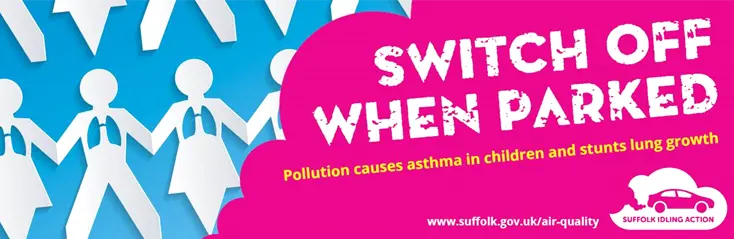
The Suffolk Idling Action Campaign encourages drivers to switch off their engines when parked, especially outside schools, to stop unnecessary harmful pollution going into the air.
The campaign includes a range of materials which are available free of charge to Suffolk residents, schools, businesses and community groups to use, including:
To request materials, email: rosie.welch@suffolk.gov.uk
- PostcardPDF1.7MB
- A4 LeafletPDF4.86MB
- Car StickerPDF2.04MB
- Social Media GraphicsPDF8.97MB
- Outdoor BannerPDF2.04MB
- Indoor & Outdoor PosterPDF1.72MB
- Website BannerPDF1.12MB
- PowerPoint TemplatePPTX2.94MB
- Idling Monitoring SheetPPTX2.93MB
School Active Travel Toolkit

This free toolkit is a practical resource to help improve air quality around schools. It covers everything from starting a school street to introducing measures to increase walking and cycling: Resources for schools - The Way To Go Suffolk
Suffolk on Board

Suffolk on Board has everything you need to travel sustainability in Suffolk, from a journey planner, through to bus and train timetables and rural transport information.
The Way to Go Suffolk

The Way To Go Suffolk is an information hub full of advice and resources relating to travel in Suffolk. It highlights the latest travel consultations, schemes in development and free walking and cycling events taking place. In addition, there are free maps and travel planning resources.
Discover Suffolk

Discover Suffolk is Suffolk County Council’s guide to getting outdoors in our county. Download the Discover Suffolk app and explore walking, cycling and riding routes throughout Suffolk. Freely available from the Apple App Store and Google Play Store.
Plug in Suffolk

Plug in Suffolk is a county wide initiative providing public electric vehicle charge points and community car clubs. Visit the website to find out more including where your nearest charge point is and where your closest car club is for hire of an EV vehicle by the minute hour or day.
Warm Homes Suffolk

Warm Homes Suffolk helps households reduce their fuel bills and tackle cold, damp and mould in their homes that could be making them unwell. Visit the website for more information and to access support.
Enforcing the regulations governing the sale of solid fuel

The Air Quality (Domestic Solid Fuels Standards) (England) Regulations 2020 came into effect on 1 May 2021. The Department for Environment, Food and Rural Affairs (Defra) put in place the ‘Ready to Burn’ Scheme as part of these Regulations – an initiative to help homeowners look after their wood burning equipment and improve air quality.
These regulations are enforced by Suffolk County Council’s Trading Standards who can be contacted for advice via their reporting website using the online enquiry form or by calling 0808 223 1133.