
Outdoor water is different from a swimming pool. Conditions can change quickly and the water is not treated. Taking a few simple precautions can help you stay safe and reduce the risk of becoming unwell.
This page brings together advice on staying safe and protecting your health before, during and after outdoor swimming.
Choosing where to swim
Choosing a suitable swimming location can reduce risks and make swimming safer and more enjoyable.
Where possible, swim at locations set up for the public, particularly lifeguarded beaches, where lifeguards can offer advice and respond quickly in an emergency. You can find your nearest lifeguarded beach using the RNLI's website: Find my nearest lifeguard beach. In Suffolk, many coastal areas are popular for swimming, but lifeguard cover is limited and inland waters can be less predictable, so always check conditions and make sure you can get in and out of the water safely.
Avoid higher-risk areas, such as:
- Harbours, estuaries and busy waterways
- Weirs, locks and fast-flowing rivers
- Areas with strong currents, sudden drops or boat traffic
Before you get in, take time to check your surroundings:
- Make sure you can get in and out of the water safely
- Look for safety signs and follow local advice
- Be aware of tides and changing conditions
- Check water quality. The Environment Agency publishes water profiles for many coastal locations, updated during the bathing season (May–September) but viewable at any time
- Avoid swimming for up to 48 hours after heavy rainfall
- Do not enter if the water looks very muddy, has scum or foam, smells unusual, shows signs of blue-green algae, or has dead fish or birds nearby
- Avoid areas with strong currents, deep water or boat traffic.
Staying safe in the water
Swimming outdoors can be enjoyable and safe for most people, but it's important to respect the water and know your own limits.
- Never swim alone, go with others who can look out for you
- Stay within your depth and don't go too far from shore
- Avoid alcohol or drugs before swimming, as they increase risk
- Remember that open water is more demanding than a swimming pool
Cold water shock
Cold water is a key risk in the UK, and a leading cause of drowning. Water below 15°C can cause cold water shock, which quickly affects your breathing and movement, even in summer. The average sea temperature around the UK and Ireland is just 12°C, and inland waters such as lakes, rivers and reservoirs can be colder still. Cold water shock also causes a rapid rise in heart rate and blood pressure, which in some cases can lead to cardiac arrest.
To reduce the risk:
- Enter the water slowly to let your body adjust
- Keep your breathing under control
- Wear a wetsuit if needed
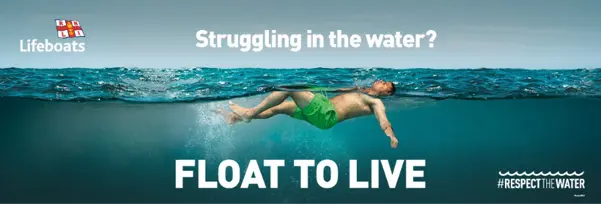
If you get into difficulty - Float to Live
The best way to float is to tilt your head back with your ears submerged.
Try to relax and breathe normally. You can gently move your hands and legs to help you stay afloat. Spread your arms and legs out to improve stability, and it's OK if your legs sink, we all float differently.
Once your breathing is under control, call for help or swim to safety. The Float to Live technique works both at the coast and in inland waters. It's a good idea to practise floating in a supervised location, like a swimming pool.
📞 In an emergency
If you are inland, call 999. If you are at the coast, call 999 and ask for the Coastguard.
For more information about staying safe in the water, visit the RNLI Safety pages.
Protecting your health when swimming outdoors
Outdoor water is not treated like a swimming pool, so it can contain bacteria, viruses or parasites that can sometimes cause stomach bugs and infections. You can reduce your risk of becoming unwell by taking a few simple steps.
Before you swim:
- Check water quality information if available
- Avoid swimming during or after heavy rainfall
- Do not swim in water with blue-green algae, scum or pollution
- Cover any cuts, scratches or sores with a waterproof plaster
While you swim:
- Follow local safety signs and advice
- Stay away from streams or drains flowing into the sea
- Avoid swallowing water or splashing it into your mouth where possible
- Consider wearing protective clothing, such as a wetsuit, gloves or footwear
After you swim:
- Wash your hands thoroughly with soap and water, especially before eating or handling food
- Clean any cuts or grazes, and shower as soon as you can
- Rinse and dry your swimwear, wetsuit and equipment
If you become unwell after swimming, for example with diarrhoea or sickness, seek medical help and tell them you have been swimming in open water.
Read more about staying healthy on the UKHSA's UKHSA - Swim Healthy pages.